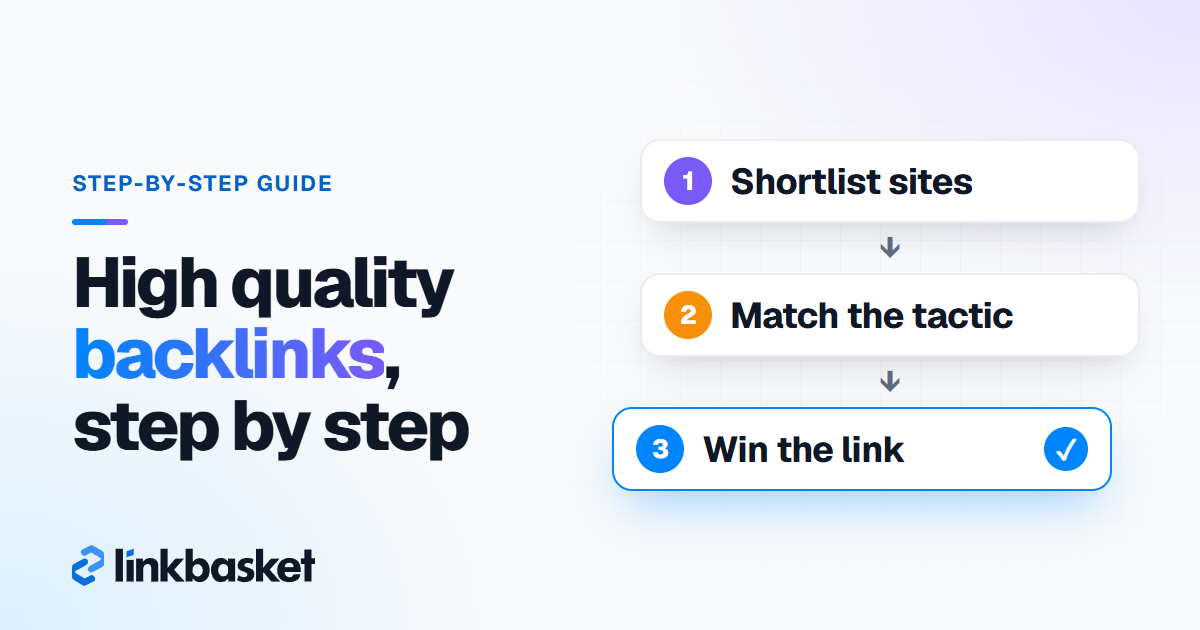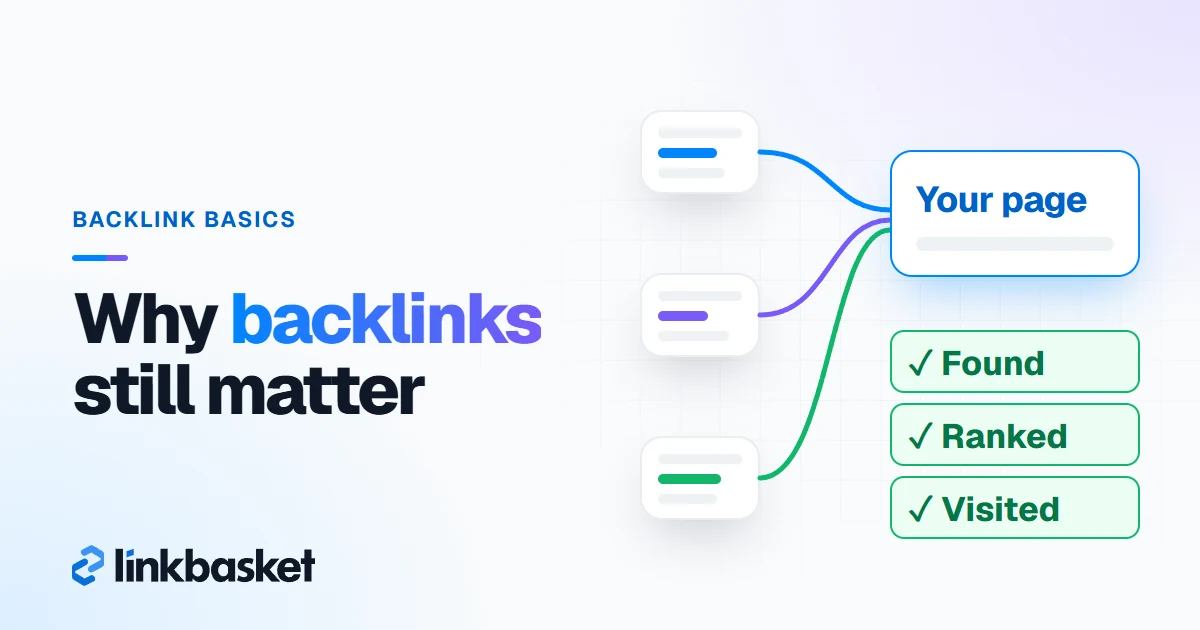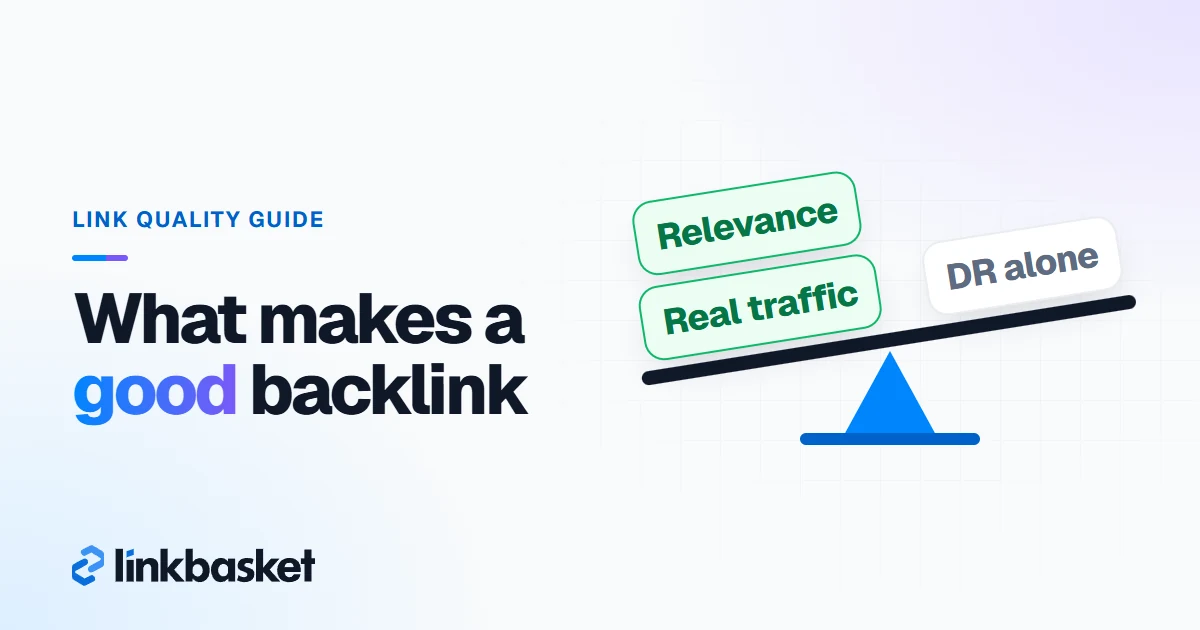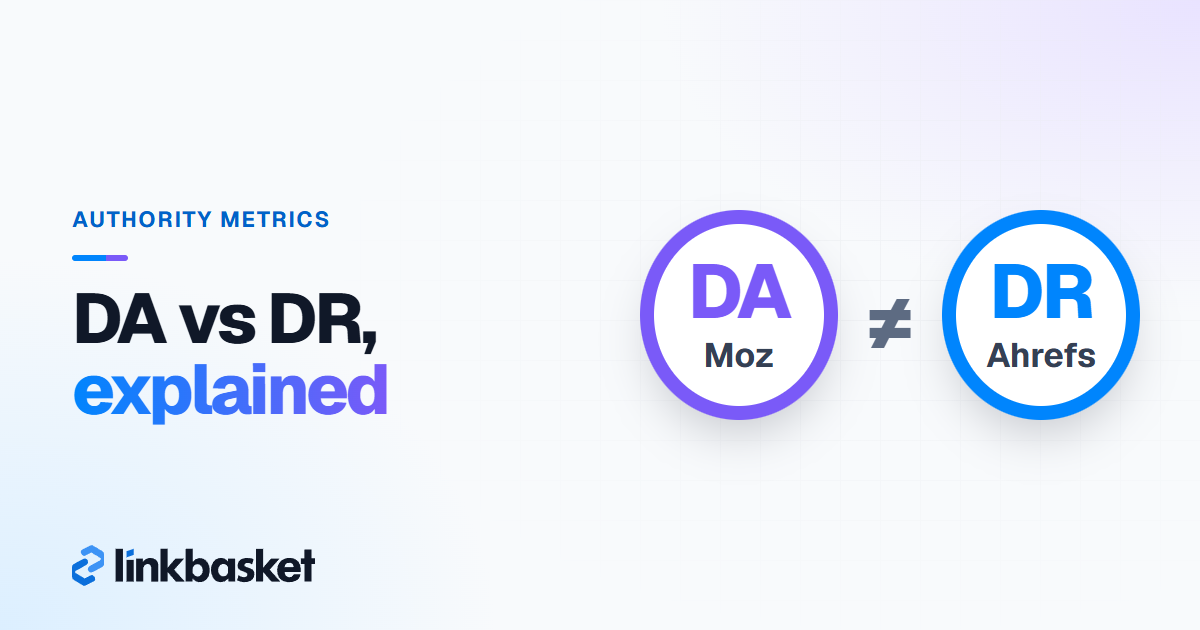
DA (Moz), DR (Ahrefs) and Authority Score (Semrush) each grade a website's backlink profile on a 100-point scale, and none of them is a Google metric. So high DA backlinks are links from sites with strong link profiles, nothing more. Use the scores to shortlist sites, then decide on traffic and relevance.
Last updated: November 9, 2026
We checked each vendor's own documentation on November 9, 2026. Where a vendor doesn't publish a detail, we say so.
DA vs DR: what's the difference?
The difference between DA and DR is who builds them and from what: Moz's DA is a machine-learning score built mainly from linking root domains, while Ahrefs' DR is a purely link-based score that measures how much link strength a site receives. Semrush's Authority Score adds traffic and spam signals.
| Moz DA | Ahrefs DR | Semrush Authority Score | |
|---|---|---|---|
| Scale | 1 to 100 | 0 to 100 | 1 to 100 |
| Built from | Backlink data via a machine-learning model | Followed links from unique domains | Link Power, Organic Traffic, Spam Factors |
| Uses organic traffic? | Not stated | No, "purely link-based" | Yes |
| Accounts for spam? | Not stated as an input | No, per Ahrefs | Yes, via Spam Factors |
| Google metric? | No | No | No |
| Gets harder at the top? | Yes, per Moz | Yes, logarithmic | Not stated |
One site can score very differently across the three. That isn't an error. Each vendor runs its own crawler, sees a different slice of the web and weighs what it finds in its own way, so a gap of 10 or 15 points between tools is ordinary.
Don't trust any one score on its own. What each can't see matters as much as what it measures:
Moz DA
Blind spot: it's relative, so it can drop when big sites gain links, even if nothing changed on yours.
Ahrefs DR
Blind spot: no traffic input and no spam check, so junk links can push it up.
Semrush AS
Blind spot: Semrush doesn't publish how it weights links, traffic and spam.
Sources: Moz's Domain Authority page, Ahrefs' help centre and blog, and Semrush's knowledge base, all checked November 2026.
How is Moz Domain Authority (DA) calculated?
Moz calculates Domain Authority with a machine-learning algorithm that mainly uses backlink data, including the number of linking root domains and the quality of those links. Its Domain Authority page, last updated March 18, 2025, gives the details.
The key points, from Moz itself:
- Scores run from 1 to 100, and new websites start at 1.
- DA is relative. It compares a site with others in Moz's index, so your score can drop when big sites gain links, even if nothing changed on yours.
- Moz says it's easier to grow a score from 20 to 30 than from 70 to 80.
- Moz states plainly that DA "is not a Google ranking factor and has no effect on the SERPs."
Moz also says there's no universal "good" DA. A DA 30 might be strong in one industry and weak in another. In practice, that makes it a benchmarking tool: useful against your direct rivals, meaningless as a pass mark.
How is Ahrefs Domain Rating (DR) calculated?
Ahrefs calculates Domain Rating from the followed links a site gets from unique domains, weighted by the DR of each linking domain and how many other sites that domain links to. Its help article on DR describes the method.
In plain terms:
- Count each domain once. Only the first followed link from each domain raises DR. Fifty links from one site count once.
- Split the rating. A linking site splits its rating equally among the domains it links to. So between two sites with the same DR, a link from one that links to 10 domains passes more than a link from one linking to 10,000.
- Scale to 100. Ahrefs scales the result to 0 to 100 on a logarithmic scale, so each point is harder to gain near the top.
Ahrefs is upfront about the limits. Its own blog calls DR "purely link-based", with no traffic input, and says DR doesn't account for backlink spam. Piles of junk links can push it up. Remember that when you see a seller quoting DR 70 and nothing else.
How is Semrush Authority Score calculated?
Semrush calculates Authority Score from three groups of signals: Link Power, Organic Traffic and Spam Factors, which Semrush also calls Natural Profile. Its knowledge base page explains each.
- Link Power: the quality and quantity of backlinks
- Organic Traffic: the site's estimated monthly organic traffic
- Spam Factors: signs of manipulation or spam in the link profile
As of November 2026, Semrush refreshes the score every two weeks and says Authority Score "is best used for domain comparison", not as an absolute good or bad grade. Because it folds in visits and manipulation signals, it's the hardest of the three to pump up with links alone. Honestly, it's also the least transparent: Semrush doesn't publish the weighting.
Does Google use DA, DR or Authority Score?
Google doesn't use DA, DR or Authority Score. All three are built by SEO tool companies from their own crawlers, and Moz itself says DA has no effect on search results.
Google does run its own link analysis. Its guide to ranking systems lists link analysis systems and PageRank, and says PageRank still forms part of its core ranking systems. But Google doesn't publish a score, and as Ahrefs' own blog puts it, "Google ranks pages, not websites." A third-party score is an outside guess at the same idea, made with a different crawl and a different formula.
So a DA 60 site doesn't pass "60" of anything to you. Moz's model simply thinks it has a strong link profile. Whether its link helps you depends on things no vendor's number sees: relevance, placement and whether Google trusts the site.
What's the common mistake when comparing DA vs DR?
The common mistake is treating a DA and a DR as the same number. A DA 50 and a DR 50 aren't equal, and a site's scores can be far apart because each tool crawls a different slice of the web and weighs links differently.
Sellers know this. When a site's DA is 55 and its DR is 22, guess which one appears in the listing? Always check both, plus traffic. One rating far above the others? Ask why before you pay.
Which metric should you use, and when?
Use DR to compare backlink strength quickly, Authority Score when you want traffic and spam folded in, and DA when you work in Moz or want its Spam Score beside it. The verdict depends on four conditions.
| Condition | Best metric | Why |
|---|---|---|
| Comparing many sites' link strength fast | Ahrefs DR | Simple, link-only, widely quoted |
| Screening out link-inflated sites | Semrush Authority Score | Includes traffic and spam signals |
| Already working in Moz, checking spam | Moz DA with Spam Score | Same index, one workflow |
| Deciding whether to pay for a link | None alone | Check organic traffic and relevance |
For buying links, DR is the most practical first filter because it's link-only and easy to compare. However, if you suspect a site's links are inflated, Authority Score is the better check, and if traffic is near zero, no score should save the site.
The answer flips in three cases:
- If the site's organic traffic is near zero, ignore every score and skip the site.
- If DA and DR disagree by 30 points or more, don't trust either until you've seen traffic and recent posts.
- If you only have one tool, use its metric consistently, because mixing ratings from different vendors on one shortlist creates false rankings.
What are the traps in buying high DA backlinks?
The traps in buying high DA backlinks all come from the same gap: the score measures a site's links, not its readers, topic or honesty. Five patterns show up again and again.
- High score, no traffic. Google's spam policies list expired domain abuse: buying an old domain and reusing it to manipulate rankings. Such sites keep their old links, and so their DA, while earning almost no search traffic.
- Link-inflated scores. Ahrefs says low-quality links can raise DR. A site can buy its way to a high score.
- "DA 50+ packages" with no site names. If you can't see the domain, you can't check relevance or traffic. Don't buy blind.
- Off-topic "general" sites. A high DA guest post on a site that publishes every niche is a link-seller pattern.
- The policy risk. Google's spam policies treat links bought to manipulate rankings as link spam, and ask that paid links carry
rel="sponsored"ornofollow.
What lowers the risk: a relevant editorial site with real organic traffic, an in-body placement, a natural anchor and no link-farm neighbours. Our guide to what makes a good backlink covers all eight checks.
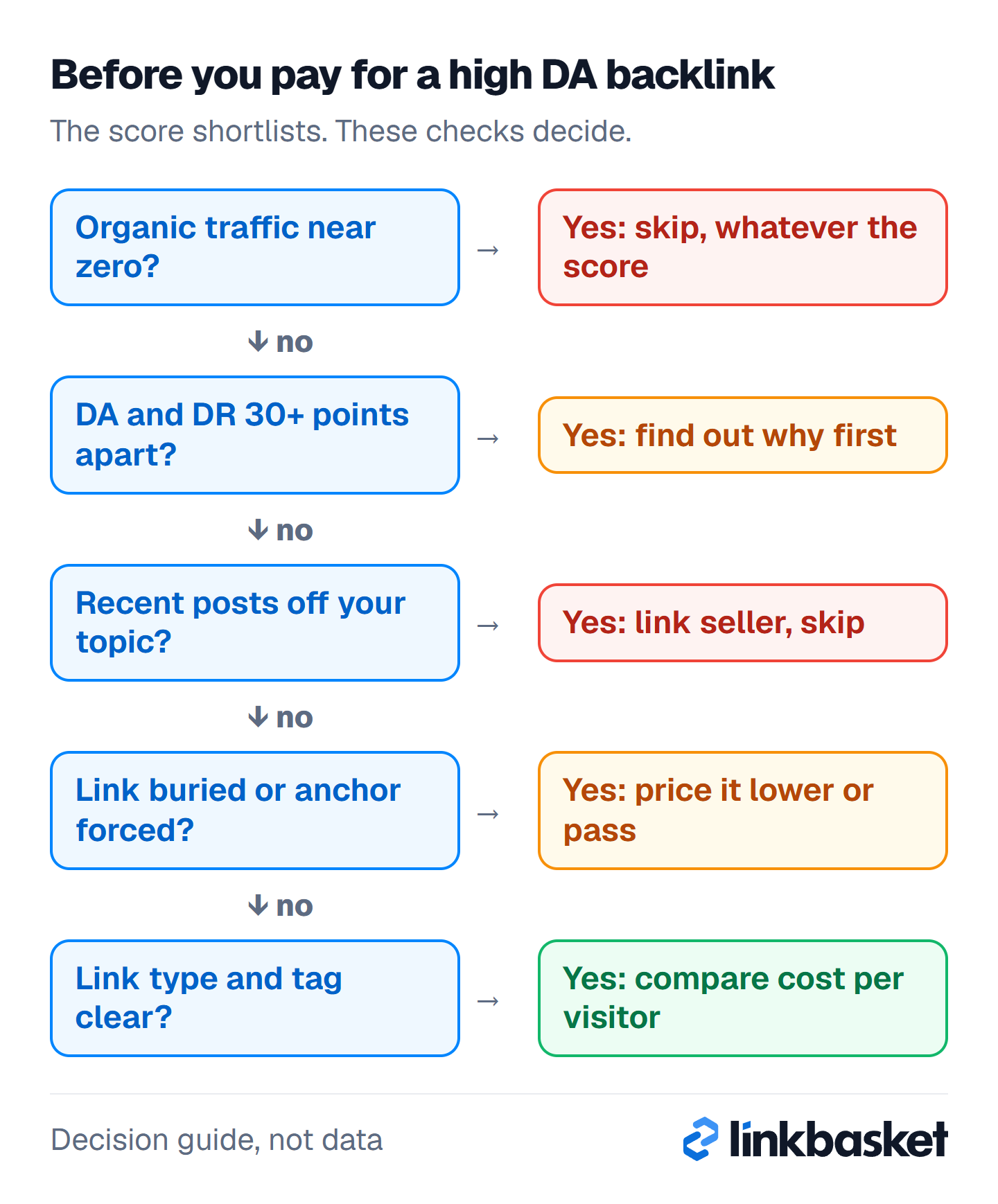
Work down the tree. In practice, a red box means skip the site; an amber box means slow down and ask questions before you pay.
How do you compare two high DA backlinks in practice?
Compare two high DA backlinks by putting DA, DR, organic traffic and price side by side, then working out cost per 1,000 monthly visits. Here's a worked example with 2 sites, and every number in it is hypothetical.
Say you sell project-management software and you're weighing two guest posts:
| Site X | Site Y | |
|---|---|---|
| Moz DA | 62 | 38 |
| Ahrefs DR | 24 | 41 |
| Monthly organic traffic | 400 | 18,000 |
| Topic | General: business, travel, crypto, health | Remote-team management |
| Price | $300 | $180 |
| Cost per 1,000 monthly visits | $750 | $10 |
Site X has the "high DA backlink." It also has a DA and DR 38 points apart, almost no visitors and an off-topic mix. Site Y wins on every check that matters, at 75 times better value per visitor. Pick Y.
Are free high DA backlinks worth getting?
Free high DA backlinks are rarely worth much, because they usually come from profiles, comments or directories on big platforms, where links are nofollow or ugc and buried among thousands of others. The domain's DA belongs to the platform, not the page your link sits on.
Google's spam policies list low-quality directory and bookmark links and forum comments with optimized links as link spam. A few honest profiles on platforms your customers use are fine for brand searches. Mass-creating them for the DA number isn't.
Which edge cases change how you read DA and DR?
Four edge cases change how you read DA and DR: new sites, score updates, regional sites and big user-generated platforms.
- New sites start at DA 1 and low DR, so a young but excellent niche blog can look weak on paper; read its traffic trend instead
- Score updates move numbers with no change on the site, since Semrush refreshes every two weeks and Moz says DA fluctuates as the web changes
- Regional sites may score low on global link metrics yet dominate one country's search results
- User-generated platforms carry huge domain scores, but your page there has none of that authority, and links are usually nofollow or ugc
When should you not buy high DA backlinks?
Don't buy high DA backlinks when the seller won't name the sites, when traffic doesn't match the score, or when your site has a manual action for unnatural links. In that last case, hire an independent SEO auditor who doesn't sell links, us included.
Don't bother haggling. Walk away if any line is true:
- The seller quotes DA or DR but won't name the site.
- Organic traffic is near zero next to a high score.
- DA and DR sit 30 or more points apart with no explanation.
- Search Console shows a manual action for unnatural links.
- The page you want to link to isn't the best answer on its topic yet.
Most people skip that last line, because the page is theirs. A strong link pointing at a weak page wastes both.
FAQ
What does DA mean in SEO?
DA stands for Domain Authority, a 1 to 100 score from Moz that predicts how well a domain might rank, based mainly on its backlinks. It is not a Google metric. Higher scores mean a stronger link profile relative to other sites in Moz's index.
What is a good DA score?
There's no universal good DA, as Moz itself says. Compare your score with the sites ranking for your keywords. A DA 30 can lead one niche and trail in another.
Is DA or DR more accurate?
Neither is more accurate at predicting Google rankings, because neither is Google's measure. DR is easier to reason about since it's link-only and Ahrefs documents the method. Use one consistently, and always check traffic next to it.
Are high DR backlinks the same as high DA backlinks?
No. They often overlap, but a site can have high DA and low DR or the reverse. Check both, plus organic traffic. Our guide to backlinks vs referring domains explains why counting unique domains matters for both scores.
Next step: compare DA, DR and traffic on one screen
LinkBasket is our marketplace. In the LinkBasket site inventory, each site page shows DR (Ahrefs), DA (Moz), organic traffic, referring domains, Moz spam score and top country before you pay, with a free account and no card. After an order goes live, LinkBasket checks the link weekly for 12 months. To judge the site beyond its scores, read our guide to relevant link building, and see how high quality backlinks are earned without buying any.