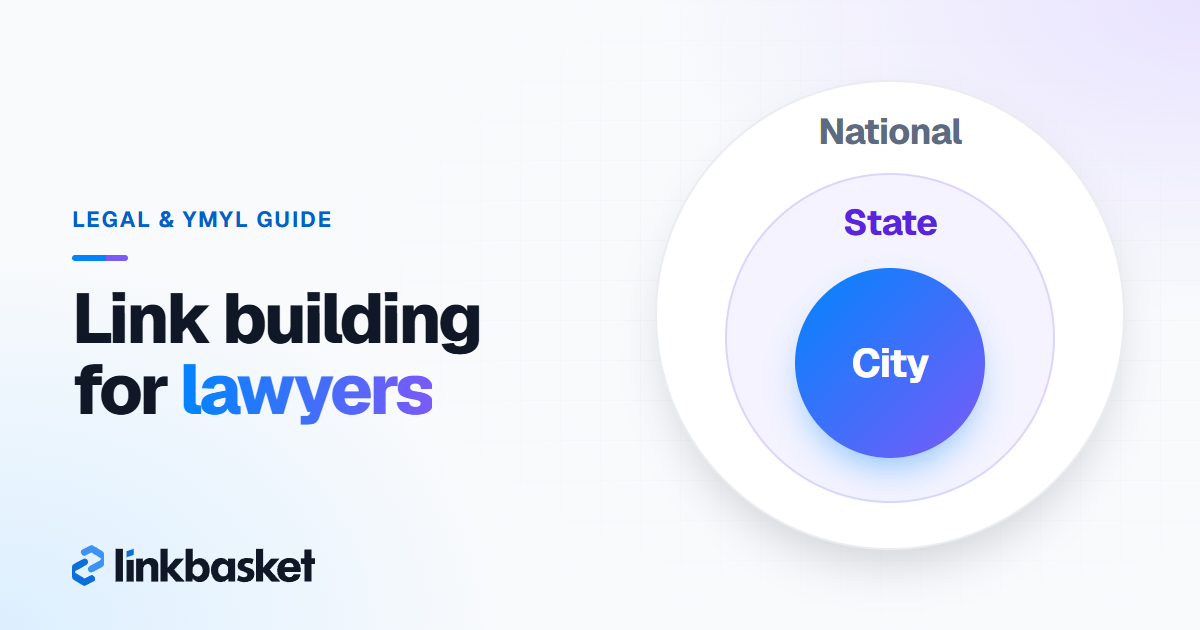
Link building for lawyers is about fewer, better links: legal and local sites whose readers could become clients, inside content an editor would stand behind. Legal advice affects people's money and safety, so treat it as a YMYL topic. Publishers that accept legal content also tend to be stricter about it. On LinkBasket, you find candidates with the niche and country filters, check each site's metrics, and see any sensitive-topic surcharge on the site page before you pay.
Why is link building for lawyers different?
Because legal content is YMYL. Google's guide to creating helpful content says its systems give even more weight to strong E-E-A-T on topics that could affect people's health, financial stability or safety (checked November 2026). A link from a careless site does a law firm little good.
Three things change in practice:
- Relevance is stricter. A link from a legal blog, a local news site or a business publication makes sense. A link from a recipe blog doesn't.
- Location matters. A personal injury firm in Leeds needs readers in Leeds, not a global audience.
- Editors are pickier. Many publishers limit legal topics, refuse aggressive anchors, or charge more for sensitive subjects.
Which links help a law firm most?
The links that help most come from sites your future clients or referrers actually read. Here's how common sources compare.
| Link source | Relevance | What to watch |
|---|---|---|
| Local news and city sites | High for local firms | Pitch real stories, not ads |
| Legal blogs and publications | High | Stricter editors, often higher prices |
| Business and finance sites | Medium to high | Fits corporate, tax and employment law |
| Legal directories and bar listings | Medium | Mostly citations; see our directory link building guide |
| Sponsorships of local groups | Medium | Paid links should carry a sponsored or nofollow tag |
| Unrelated general blogs | Low | Skip them, whatever the DR |
Our local link building guide covers the free and earned side in more depth.
How do you find legal sites on LinkBasket?
Use the filters, and don't trust a niche label alone. We don't promise a set number of legal sites, so check what's listed for your practice area and country today.
- Filter the inventory by niche (legal, if listed for your country, or the closest business niche) and by country.
- Open each site page and check the topics the publisher doesn't accept. Some exclude legal content entirely.
- Look for a sensitive-topic surcharge. Publishers that charge extra say so on the site page.
- Compare organic traffic and top traffic country. Readers in your jurisdiction matter most.
If the legal niche is thin in your country, a relevant business or local site is often a better buy than a distant legal one.
How does ordering legal links work?
The same four steps as any order, with a bit more care on the brief.
- Pick sites. Shortlist legal, local or business sites whose readers live where you practice.
- Add the brief. Give the target URL and a natural anchor. Bring an article reviewed by a lawyer, which our editors also check, or add writing.
- Pay from your wallet. Top up by card or crypto. Any sensitive-topic surcharge shows before you add to cart.
- The link goes live. We track the order until it's published. You get 3 days to check it, then weekly checks for 12 months.
Don't use exact-match anchors like "best divorce lawyer Chicago" on every order. Publishers may decline anchors that look spammy, and on legal content they often do. If a publisher rejects the order or can't publish it, the full price goes back to your wallet, or you take a comparable site.
What might a small legal shortlist cost? Every number here is hypothetical. Say a DR 45 legal blog lists a guest post at $300 plus a $50 sensitive-topic surcharge, and a DR 35 city news site lists one at $180. One of each comes to $530. In practice, the local site may send more of the clients you want, even with the lower DR.
Guest post or niche edit for a law firm?
Both can work. The choice depends on whether you have expert content to offer.
Guest post
A new article on the publisher's site. Best when a lawyer at your firm can write or review a useful piece.
Niche edit
Your link added to an existing article. Best when an older legal or local article already ranks and your page adds real value to it.
When you can't decide, read our niche edits service page or our guide to niche edits vs guest posts.
Is buying links risky for a law firm?
Yes. Google's spam policies list "buying or selling links for ranking purposes" as link spam, and that applies to law firms like everyone else (checked November 2026).
Lawyer advertising rules also vary by jurisdiction. Frankly, if you're unsure whether a paid placement counts as advertising where you practice, ask your bar or ethics counsel before you order.
What should a law firm check before paying?
Run every site through this list. When one answer is "no", skip that site.
- The site covers legal, local or business topics your clients read.
- Its top traffic country matches where you practice.
- The publisher accepts legal content and lists any surcharge on the site page.
- The anchor is your firm name or a natural phrase, not a stuffed keyword.
- You know the link type, the sponsored tag and the link duration.
FAQ
How many links does a law firm need?
Fewer than most niches, if they're relevant. Compare your practice-area pages with the firms ranking above you. Our guide on how many backlinks you need to rank shows how.
Why do legal guest posts cost more?
Publishers set prices from authority, traffic and niche, and some charge extra for sensitive topics such as legal content. The site page shows that before you pay.
Should a law firm hire an agency instead?
If nobody at the firm can judge a site, maybe. When you can, a marketplace gives you more control. Our link building services page compares marketplaces and agencies honestly.
Do the same rules apply to online stores?
The checks are the same, the targets differ. See ecommerce link building strategies for stores, and why we don't sell link building packages to anyone.
Next step
Create a free account, filter by your country and the closest legal niche, and shortlist three sites. Before ordering, read how to buy SEO backlinks with fewer surprises. Running links for several firms? Contact us about a bulk list.